What Is a Balanced Fund and Who Should Use One
Balanced fund explained for 2026 — 60/40 stocks bonds in one ETF. Best picks (VBIAX, Wellington), when to use one, vs target date funds and 3-fund.
Z Zar · 25 May 2026 — 8 min read
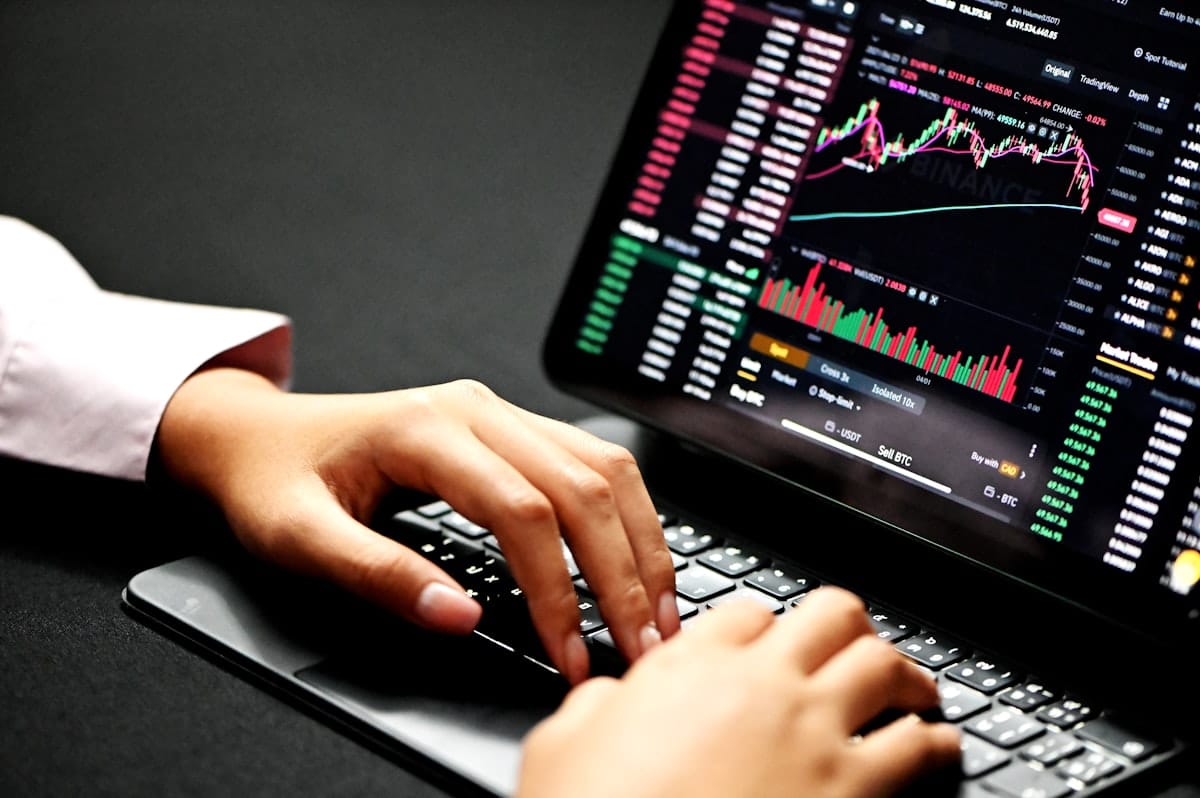
Want to go deeper on this? See stock volatility and handle it.
For the full breakdown, read open brokerage account in 10 minutes.
Want to go deeper on this? See invest in real estate with 1 000.
📈 Investing Part of our Complete Investing Guide — what a balanced fund really is, and why most people are using the wrong one.
What is a balanced fund?
A balanced fund is a single mutual fund or ETF that holds both stocks and bonds in a fixed ratio — most commonly 60% stocks and 40% bonds, but the ratio can range from 30/70 (conservative) to 80/20 (aggressive). The fund manager rebalances automatically, so the allocation stays constant regardless of market moves.
The point is simplicity. Instead of buying VTI for stocks, BND for bonds, and rebalancing every quarter yourself, you buy one balanced fund and the manager handles everything. Your portfolio is diversified across asset classes from day one, with one ticker.
Balanced funds existed long before target date funds — Vanguard Wellington has been running since 1929. They're the original "set it and forget it" investment, and millions of investors still use them today as the foundation of their portfolio.
How balanced funds actually work
Every balanced fund publishes its target allocation in the prospectus. A "60/40 balanced fund" might hold 60% in a basket of large-cap US stocks (think S&P 500 companies) and 40% in investment-grade corporate and government bonds (think 5-10 year maturity treasuries and AA-rated corporates).
When stocks rise faster than bonds, the allocation drifts (maybe to 65/35). The fund's manager sells some stocks and buys bonds to bring the ratio back to 60/40. This happens daily inside the fund — you don't see it on your statement. The cost of that rebalancing is baked into the expense ratio (typically 0.10-0.40% for index-based balanced funds, 0.50-1.00% for actively managed ones).
The result over decades is mechanical: when stocks crash, the fund auto-buys at the discount (because the ratio drifted toward bonds). When stocks soar, the fund auto-sells (because the ratio drifted toward stocks). It's a built-in "buy low sell high" without you needing the discipline.
📘 Free Download
Get the 6-page FI Checklist PDF
A roadmap to financial independence — sent to your inbox the moment you subscribe. Plus weekly investing playbooks.
Send me the PDF →No spam. Unsubscribe anytime.
Balanced fund vs target date fund vs three-fund portfolio
These three options all do roughly the same thing — give you a diversified portfolio with minimal effort. But they differ in important ways. A balanced fund keeps a fixed allocation forever (60/40 stays 60/40 in year 1 and year 30). A target date fund starts aggressive and gets more conservative as you approach retirement (90/10 at age 30 might be 40/60 at age 65). A three-fund portfolio means you hold three index funds separately (US stocks + international stocks + bonds) and rebalance manually.
The right choice depends on age, account type, and how much you want to think about it. If you're 40+ and want a fixed allocation that matches your risk tolerance regardless of age, balanced fund wins. If you're younger and want the allocation to glide more conservative over time, target date fund wins. If you want lower fees and don't mind annual rebalancing, three-fund portfolio wins.
For a deeper comparison of target date funds, see our target date fund explainer. For the DIY three-fund alternative, see our three-fund portfolio guide.
The Bogleheads' Guide to Investing by Taylor Larimore, Mel Lindauer, Michael LeBoeuf
The best balanced funds in 2026
For most investors, three balanced funds dominate the category. Vanguard Balanced Index Fund (VBIAX) is the cheapest at 0.07% expense ratio — 60% Total US Stock Market + 40% Total Bond Market, rebalanced daily. Vanguard Wellington (VWELX) is actively managed at 0.25%, has the longest track record (since 1929), and tends to be 65/35 with quality blue-chip stocks. Fidelity Balanced Fund (FBALX) charges 0.49% but has consistently outperformed its category — usually 70/30 with slightly more growth tilt.
If you're inside a 401(k), you're often limited to whichever balanced fund your plan offers — typically a Fidelity or T. Rowe Price option. The expense ratio matters far more than the brand name. Anything under 0.50% is acceptable, anything over 0.75% means you should consider building the allocation yourself with index funds instead.
Best 60/40 Funds for 2026: A Side-by-Side Comparison
The classic 60/40 portfolio — 60% stocks, 40% bonds — is the original balanced strategy and remains a benchmark for diversified investing. Despite a difficult 2022, the best 60/40 funds for 2026 have rebounded strongly and continue to deliver consistent risk-adjusted returns. Here are the top 60/40 fund options ranked by total cost, methodology, and accessibility:
1. Vanguard Balanced Index Fund (VBIAX)
Expense ratio: 0.07%. Allocation: ~60% US stocks (CRSP Total Market), ~40% US bonds (Bloomberg Aggregate). Why it wins: the cheapest 60/40 mutual fund in the industry. Pure index strategy, no active management drag, $3,000 minimum. The default choice for most investors looking for a classic 60/40 allocation in a single fund.
2. iShares Core Growth Allocation ETF (AOR)
Expense ratio: 0.15%. Allocation: ~60% global stocks (US + international), ~40% global bonds. Why it competes: the ETF version of a 60/40 portfolio with global diversification baked in. No minimum (ETFs trade per share), slightly higher fee than VBIAX but adds international exposure. Trades commission-free at every major brokerage.
3. Vanguard Wellington Fund (VWELX)
Expense ratio: 0.25%. Allocation: ~65% US stocks, ~35% US bonds (active management). Why it competes: Wellington has been running 60/40-style portfolios since 1929 — the oldest balanced fund in the US. Active management has historically produced excess returns above the index benchmark, though the higher fee narrows the gap. $3,000 minimum.
4. Fidelity Balanced Fund (FBALX)
Expense ratio: 0.49%. Allocation: ~67% US stocks, ~33% bonds. Why it competes: the Fidelity default balanced option for retail investors. Slightly more aggressive than VBIAX (67/33 vs 60/40). No minimum. Higher fee than the Vanguard index option, but solid for Fidelity-only accounts.
5. T. Rowe Price Balanced Fund (RPBAX)
Expense ratio: 0.59%. Allocation: ~65% global stocks, ~35% bonds. Why it competes: active management with global exposure. Performance history is strong but the 0.59% fee is steep when index alternatives charge 0.07%. Best for investors already at T. Rowe.
For a $100,000 investment over 30 years assuming 6% annual return, the fee difference between VBIAX (0.07%) and RPBAX (0.59%) is approximately $80,000 in cumulative fees. The best 60/40 funds in 2026 are almost always the cheapest ones — the active management premium rarely justifies a 0.5% fee gap.
Who should use a balanced fund
Balanced funds work best for three groups of investors. Conservative investors who want to be in the market but cannot stomach 100% stock volatility — a 60/40 balanced fund typically drops half as much as the S&P 500 in a bear market. Hands-off investors at any age who want one fund and no rebalancing decisions — better to own one balanced fund consistently than to own a perfect portfolio you'll second-guess. Retirees in the distribution phase who need the income generated by the bond portion and want stability of principal.
For young investors (under 35) with 30+ years to retirement, a balanced fund is usually too conservative — you're locking in 40% bonds when you should be 90%+ in stocks. Target date funds or a three-fund portfolio give better exposure.
When balanced funds are the wrong choice
Skip balanced funds if you're under 35 with 30+ years to retirement — the bond allocation drags long-term returns. Skip them if you have multiple accounts (401k + IRA + taxable) and want tax efficiency — bonds belong in tax-advantaged accounts and stocks belong in taxable, but a balanced fund mixes them indiscriminately. And skip them if you're already paying for a financial advisor — you're paying twice for the same diversification.
The other case to skip: if you're a Boglehead who values the lowest possible expense ratios, a 60/40 mix of VTI (0.03%) + BND (0.03%) beats VBIAX (0.07%) by a hair, and a three-fund portfolio (adding VXUS at 0.07%) gives you international diversification a domestic-only balanced fund lacks.
Frequently Asked Questions
Are balanced funds good for beginners?
Yes — they're one of the simplest, lowest-effort options. Buy one fund, contribute monthly, ignore the market. The simplicity is a feature, not a bug. Just make sure the expense ratio is below 0.50%.
What is a typical balanced fund allocation?
60% stocks / 40% bonds is the classic mix and what most "balanced funds" hold. Variations include 50/50 (conservative), 70/30 (moderate growth) and 80/20 (aggressive). Below 30% stocks is usually called an "income fund" instead.
How is a balanced fund different from a target date fund?
A balanced fund keeps the same allocation forever. A target date fund starts aggressive and gradually shifts conservative as the target year approaches. Target date funds change over decades; balanced funds don't.
What is the cheapest balanced fund in 2026?
Vanguard Balanced Index Fund (VBIAX) at 0.07% expense ratio. Fidelity Asset Manager 60% (FSANX) is also very cheap at 0.15% if you're a Fidelity customer.
Can I hold a balanced fund in my 401(k)?
Yes — most 401(k) plans include at least one balanced fund option. Common ones include Vanguard Balanced Index, T. Rowe Price Balanced, and Fidelity Balanced. Check your plan's expense ratios before choosing.
Do balanced funds beat the S&P 500?
No, not in raw return — the bond portion drags performance during bull markets. But they have far less volatility, smaller drawdowns in bear markets, and produce more income. The right comparison is risk-adjusted return, not raw return.
Should I sell my balanced fund to buy individual index funds?
Only if you'll actually rebalance. If you can commit to checking your allocation once a year and rebalancing back to target, a three-fund portfolio of VTI/VXUS/BND will beat a balanced fund on fees. If you won't actually do it, keep the balanced fund.
The Bogleheads' Guide to Investing
by Taylor Larimore, Mel Lindauer, Michael LeBoeuf
The classic Boglehead manual covers balanced funds, three-fund portfolios, and asset allocation in plain English — the philosophy behind every fund in this guide.
Common Sense on Mutual Funds
by John C. Bogle
Bogle himself on why balanced funds and index funds beat almost everything else — the math behind the simplicity.
📊 Want the full picture?
For the broader investing roadmap from $0 to $1M, see our Complete Investing Guide — covers asset allocation, account types, and tax strategy for every life stage.
📋 The FI Checklist
Track your path to financial independence with our free FI Checklist — a one-page printable covering every step from emergency fund to 25x annual expenses.